Big Brain Academy Review: Hilarious and Humbling Experience
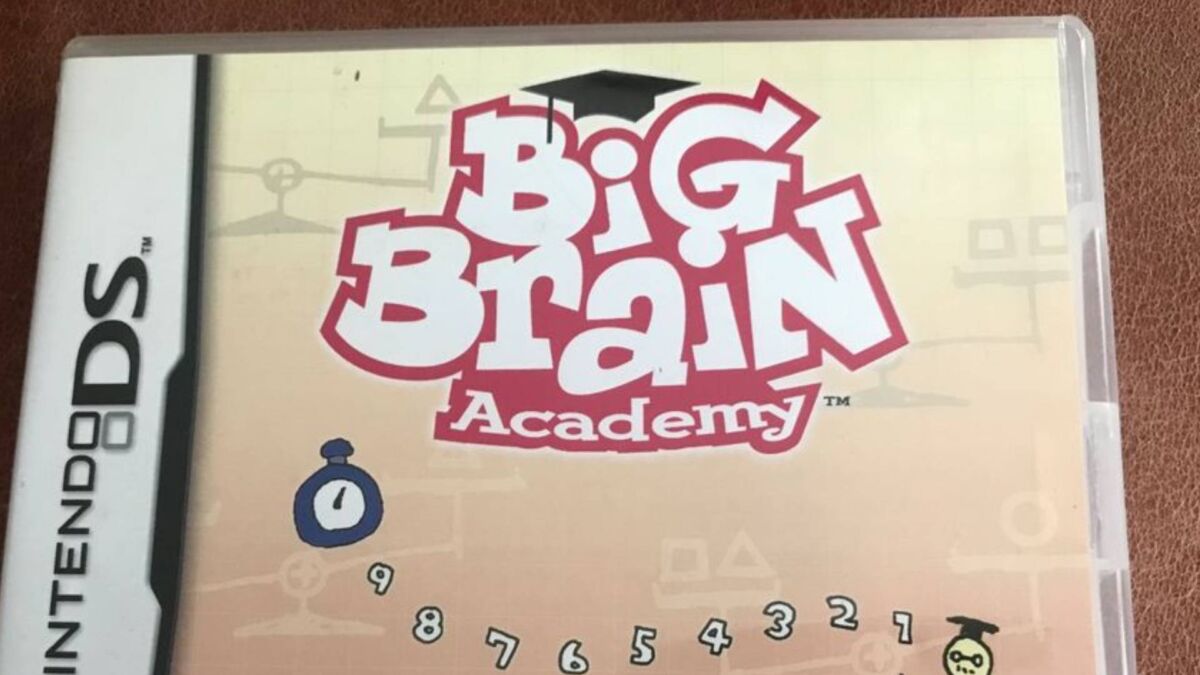
Big Brain Academy review time—because who wouldn’t want a DS game to tell them they’re mentally average in the most cheerful way possible?
- Big Brain Academy Review
- Why Big Brain Academy Still Hits Hard
- The game challenges you in five core areas:
- Big Brain Academy Review: The Humbling Grading System
- Graphics and Presentation: Simple, but Effective
- Multiplayer: Brain Battles with Friends
- How It Compares to Other Brain Games
- Big Brain Academy Review: Does It Still Hold Up?
- Big Brain Academy Review: Tips for Scoring Higher
- Final Thoughts
Big Brain Academy Review
Big Brain Academy review dives into the wonderfully bizarre world of brain training, Nintendo-style. A few minutes into the game and it’s clear: this isn’t just a quirky educational title—it’s a full-on confidence rollercoaster. One minute you’re crushing math puzzles like a seasoned academic, and the next you’re fumbling color patterns like a sleep-deprived raccoon.
If you’ve ever wanted a video game to both cheer you on and silently judge your mental agility, Big Brain Academy is the game for you.
Why Big Brain Academy Still Hits Hard
Originally released on the Nintendo DS, Big Brain Academy never really tried to hide what it was: a collection of short, skill-based mini-games designed to test your brain’s abilities across various categories like logic, memory, and analysis. But beneath its friendly aesthetic lies a ruthless grading system that gleefully points out just how “medium” your brain might be.
The game challenges you in five core areas:
- Think: Logical puzzles and sequencing
- Memorize: Pattern recall and memory chains
- Analyze: Spotting patterns and categories
- Compute: Basic to advanced math under pressure
- Identify: Visual recognition at speed
What starts as casual fun can quickly turn into competitive chaos as the game quantifies your performance with numerical brain weights, ranging from featherlight to galaxy-brain heavy.
Big Brain Academy Review: The Humbling Grading System
One of the most iconic and unintentionally brutal features of the game is the grading mechanic. After completing a handful of challenges, the game calculates your brain weight and assigns you a brain age-style score.
It’s all fun and games until your cartoon professor says your brain is equivalent to that of a distracted kindergartener.
There’s something endearingly humiliating about having your intelligence summarized as “Below Average” in pastel colors and peppy music. But that’s the genius of Big Brain Academy—it encourages you to try again. Not because you need to win, but because it tricks your pride into wanting to improve.
Graphics and Presentation: Simple, but Effective
The visuals are minimalistic, designed more for function than flash. Clean icons, soft backgrounds, and charming animations make the interface easy to follow. Professor Lobe, your friendly-but-sassy guide, adds just the right amount of Nintendo quirk to the experience.
His little dance when you succeed? Encouraging.
His passive-aggressive comments when you fail? Motivationally devastating.
Multiplayer: Brain Battles with Friends
Where Big Brain Academy truly shines is in its multiplayer mode. Few things are as chaotic and hilarious as challenging your friends to real-time brain battles, only to realize none of you can do simple division under pressure.
With download play options, players could compete using just one game cartridge—something the DS era handled brilliantly. And because the rounds are quick, it’s the perfect game for parties or short bursts of nostalgic chaos.
How It Compares to Other Brain Games
While often lumped together with Brain Age, Big Brain Academy leans much harder into arcade-style mini-games than structured regimens. Where Brain Age wants to help you meditate and train daily, Big Brain Academy basically says, “Let’s see how smart you think you are.”
It’s less clinical and more playful. Less serious science, more cartoonish taunts. And frankly, that’s what makes it infinitely more fun to revisit.
Big Brain Academy Review: Does It Still Hold Up?
Absolutely. Even in 2025, the game’s core loop of bite-sized challenges remains addictive. It’s perfect for pick-up-and-play sessions, and it offers just enough variety to keep things fresh after multiple playthroughs.
Sure, it doesn’t have the visual punch of modern games, and it’s missing deep customization or online leaderboards—but as a classic DS experience, it nails the balance of challenge and charm.
It’s also surprisingly insightful. You’ll notice your strengths quickly (math? memory?), but it also shines a spotlight on your weak spots (spatial logic? yikes). It’s an honest mirror for your brain, framed in bright Nintendo packaging.
Big Brain Academy Review: Tips for Scoring Higher
If you’re looking to actually impress Professor Lobe, here are some quick tips:
- Stay Calm Under Pressure: Most challenges are timed. Panic = mistakes.
- Replay Specific Categories: Practice your weakest area regularly.
- Use Headphones: Helps to eliminate distractions, especially for audio cues.
- Mix Up the Order: Don’t just spam one section; balance matters for overall brain weight.
- Set Mini Goals: Try to improve just one stat per session to avoid burnout.
Consistency wins here—not brute-force memorization.
Final Thoughts
Big Brain Academy isn’t just a game. It’s a low-stakes brain brawl wrapped in delightful Nintendo charm. Whether you’re revisiting it out of nostalgia or discovering it for the first time, expect laughter, frustration, and a newfound respect for quick math.
You’ll fail. Often. But you’ll come back for more, determined to beat your last score and maybe—just maybe—earn the elusive “Elite Brain” rating.
Boot up your DS, sharpen your mind, and prepare to be roasted by a floating brain professor. Big Brain Academy is waiting to grade you—and it’s not going to sugarcoat the results.